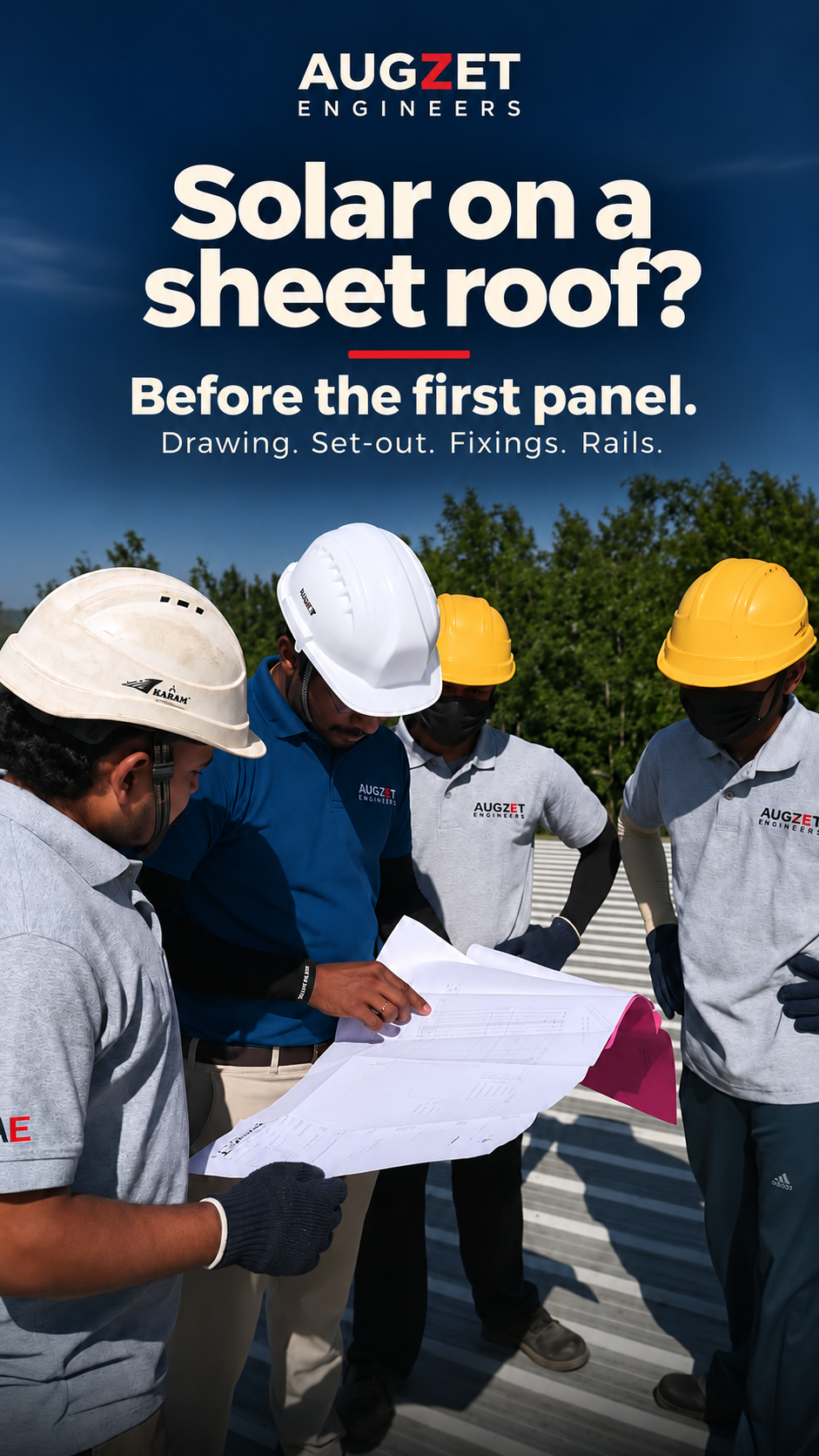
Before the first panel: checking the drawing, setting out the roof, fixing the mounts and laying the rails. A look at the mounting stage of Augzet's site work.
Planning solar for your home or business? Message Augzet Engineers.
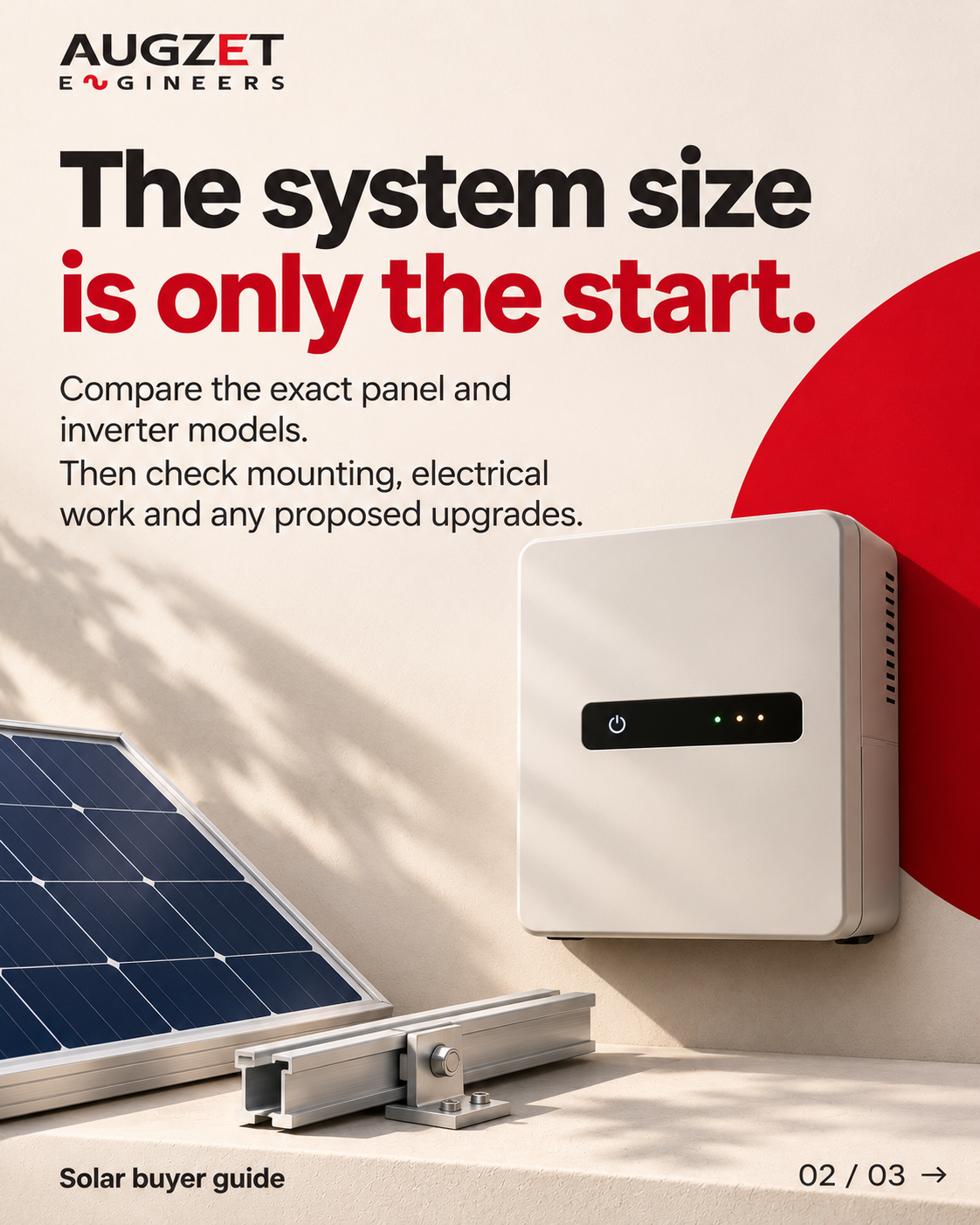
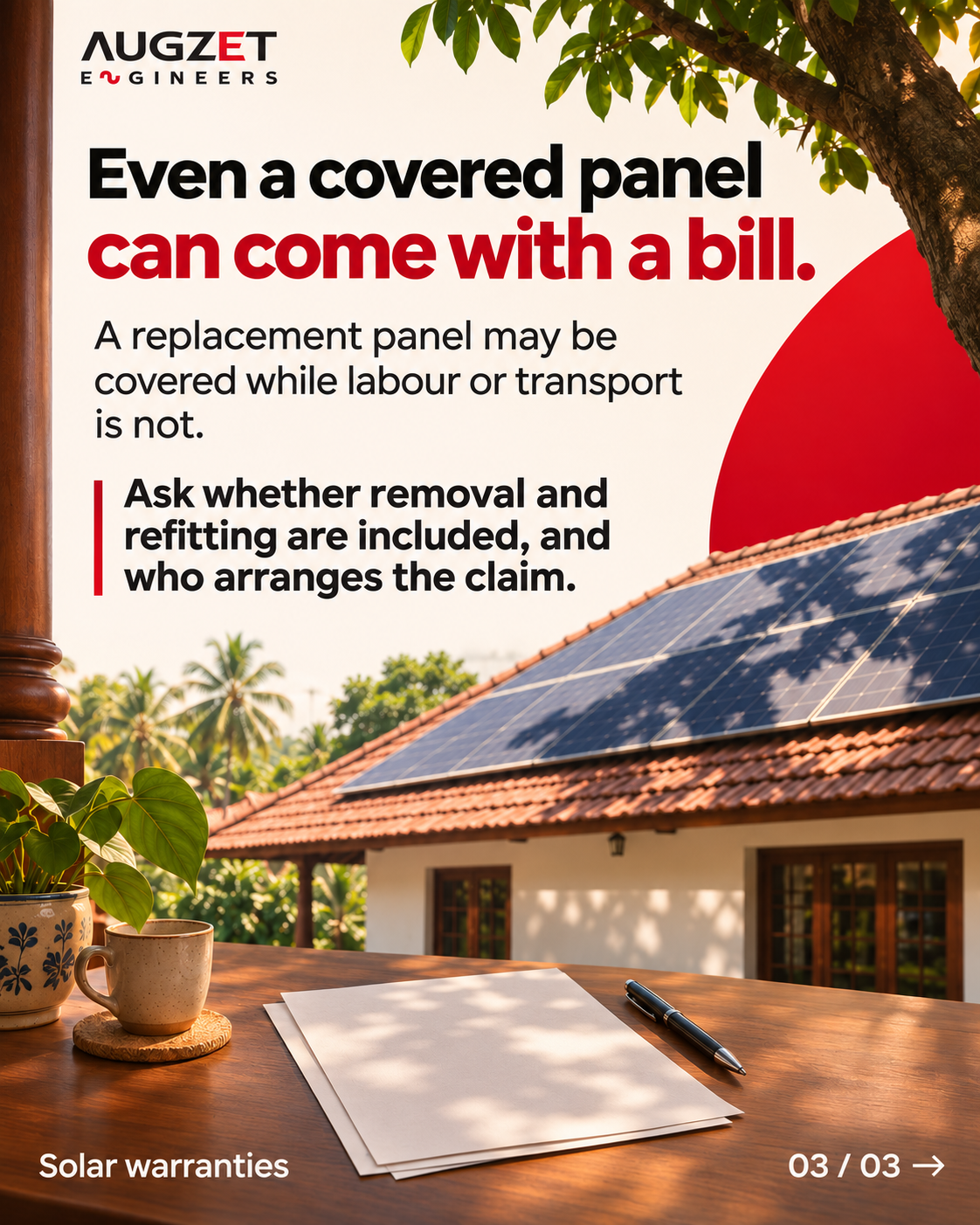
Two proposals can name the same system size and still describe different equipment and work. Ask each installer to list the exact models, the installation scope, possible extra charges and the warranty process. Compare the gross price on the same basis; keep any expected subsidy separate from what you must pay and when. A lower total is useful only when you know what it covers.
Planning solar or electrical work? Message Augzet Engineers to discuss your requirements.
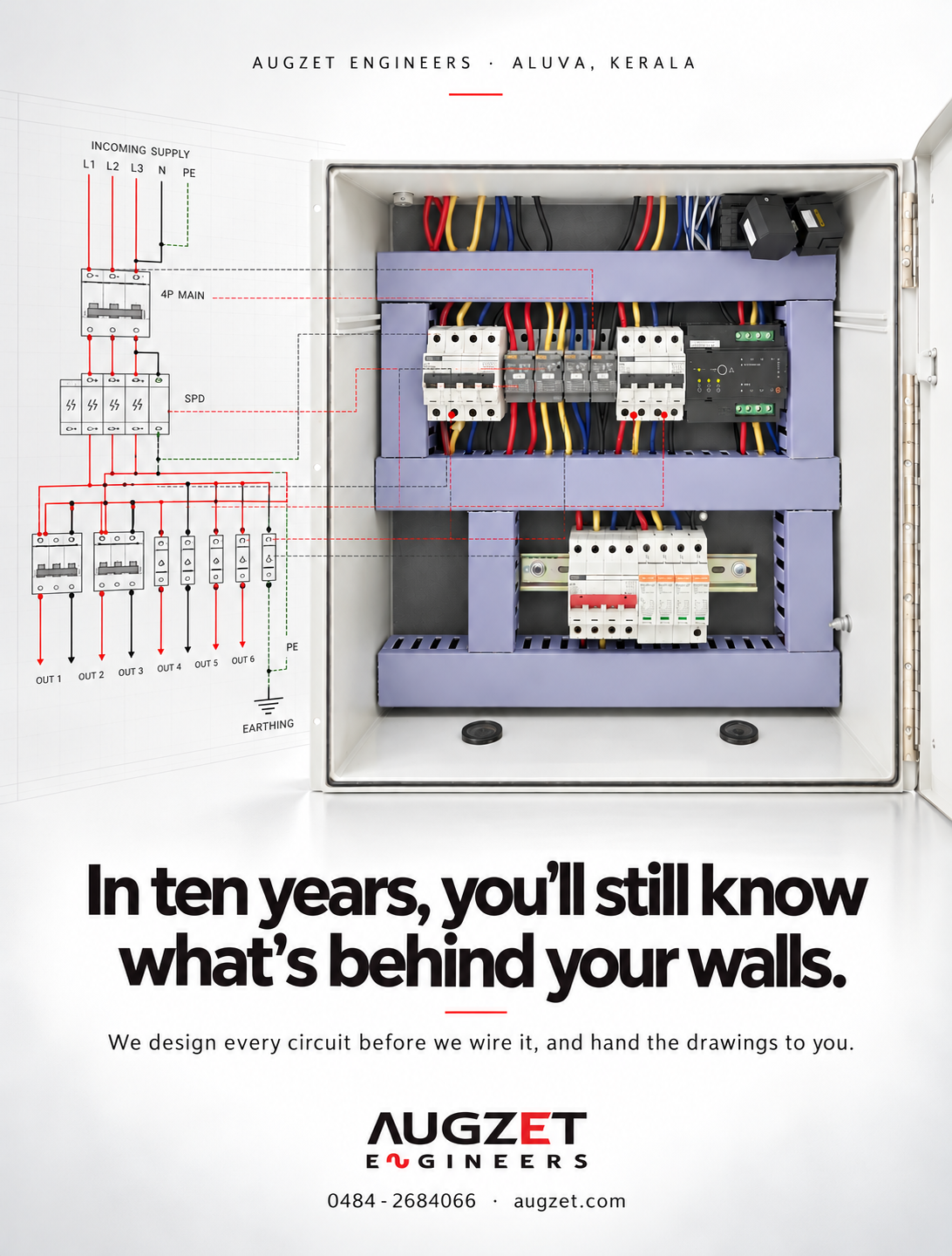
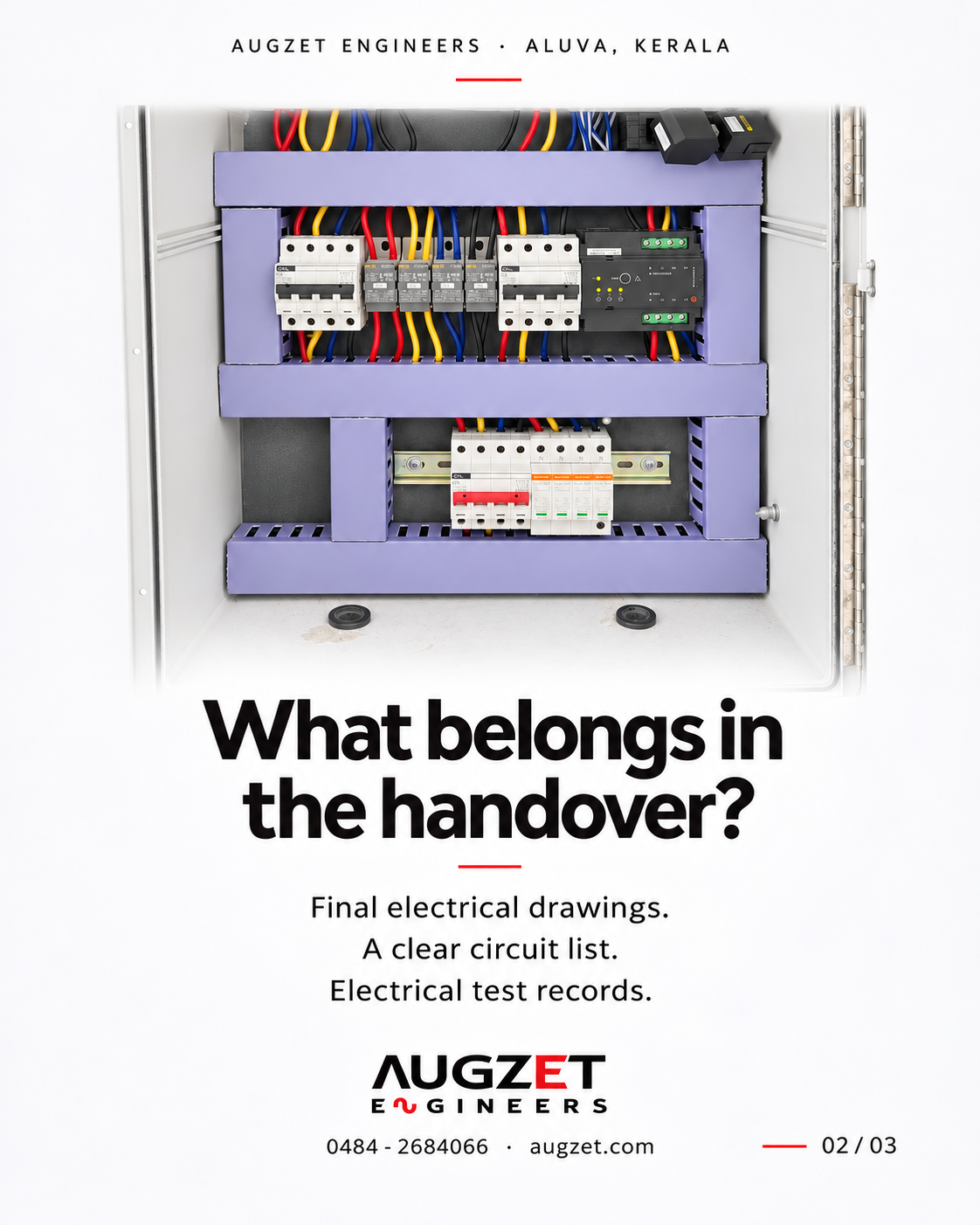
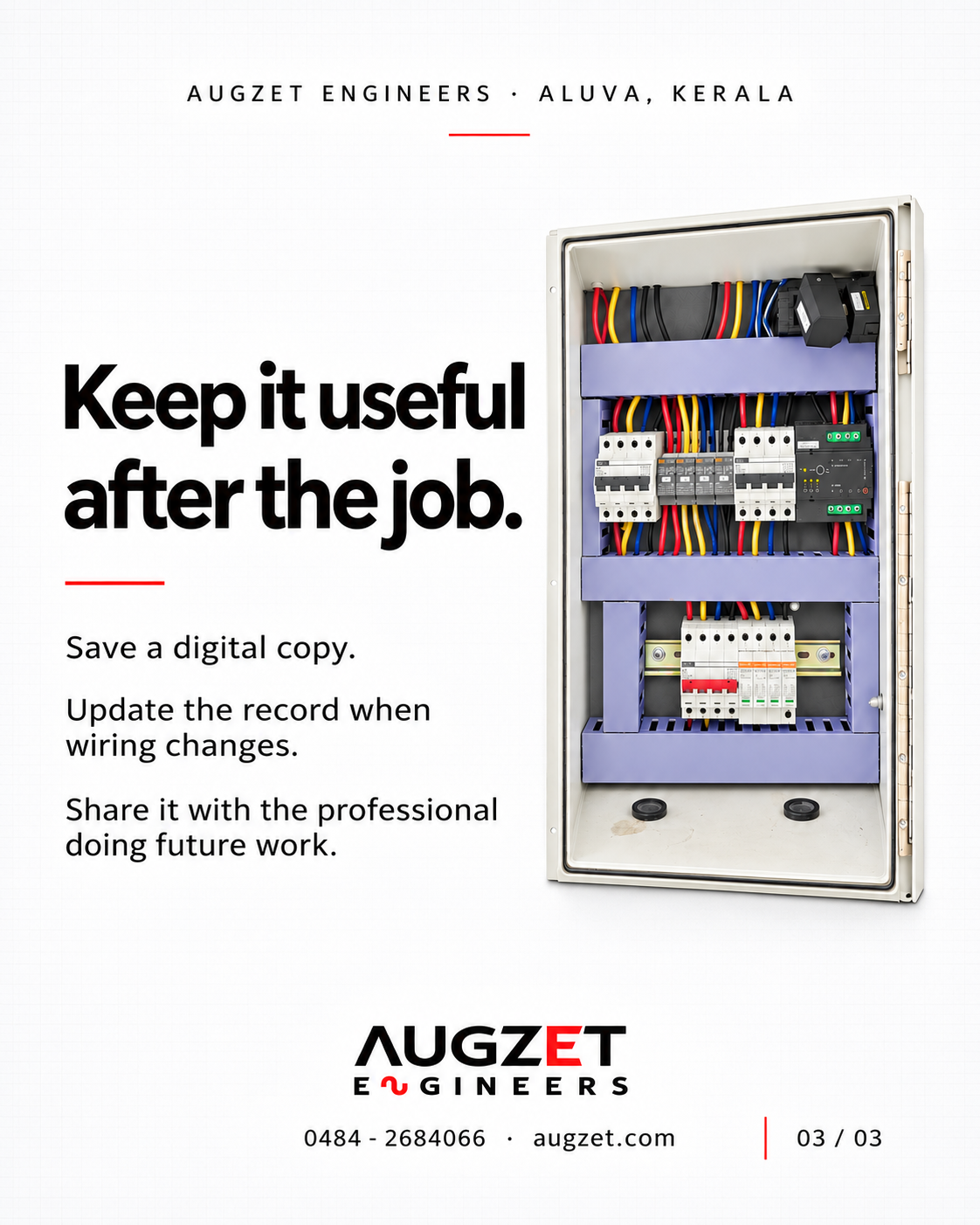
Building a home or planning rewiring? A useful electrical handover should leave you with a record you can find and understand later. Ask for final drawings, an identifiable circuit list and test records, then keep a digital copy. If the wiring changes, have the record updated too.
Planning solar or electrical work? Message Augzet Engineers to discuss your requirements.
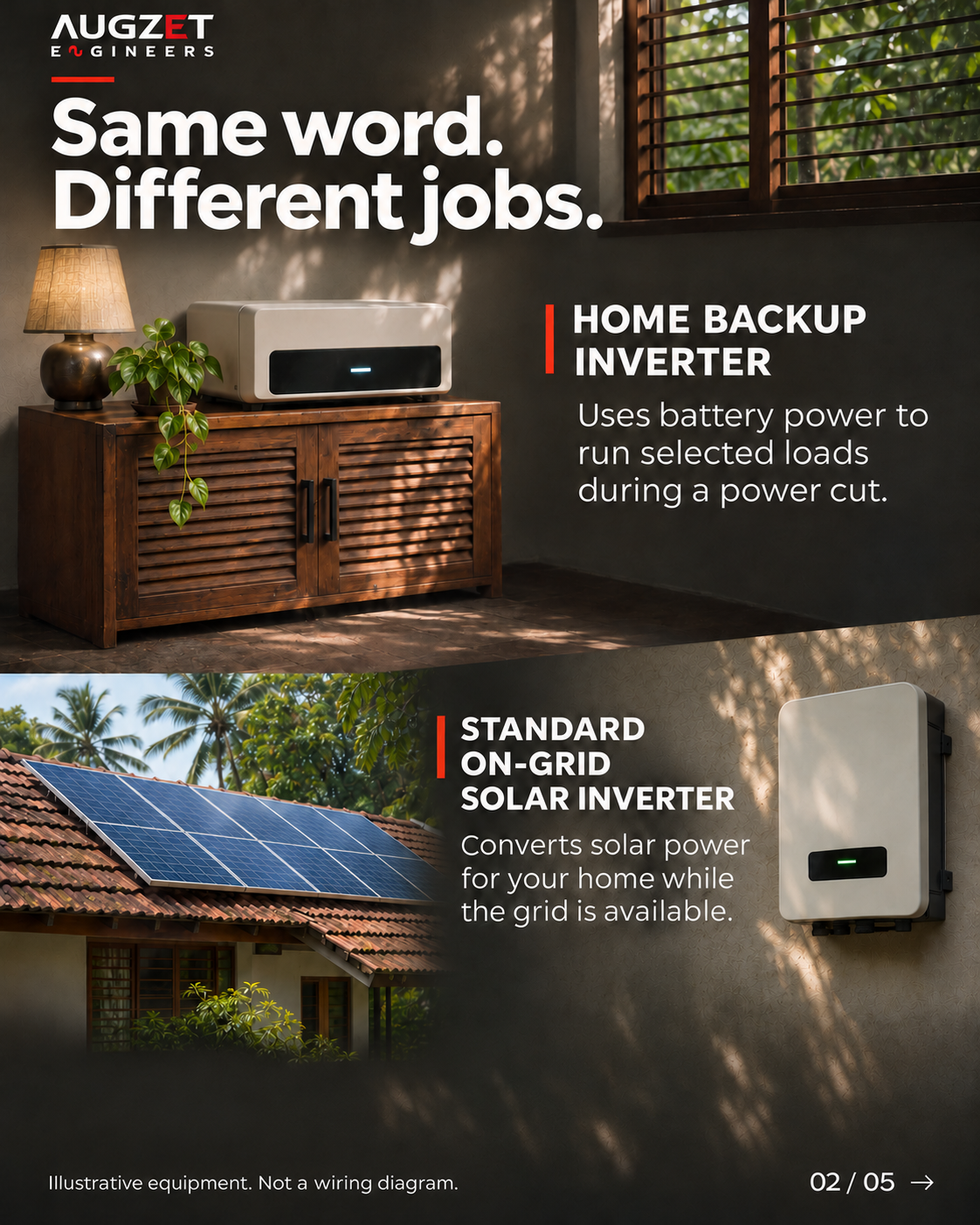
An existing home inverter and a standard on-grid solar inverter have different jobs. Going solar does not, by itself, tell you whether your existing backup equipment should stay or be replaced.
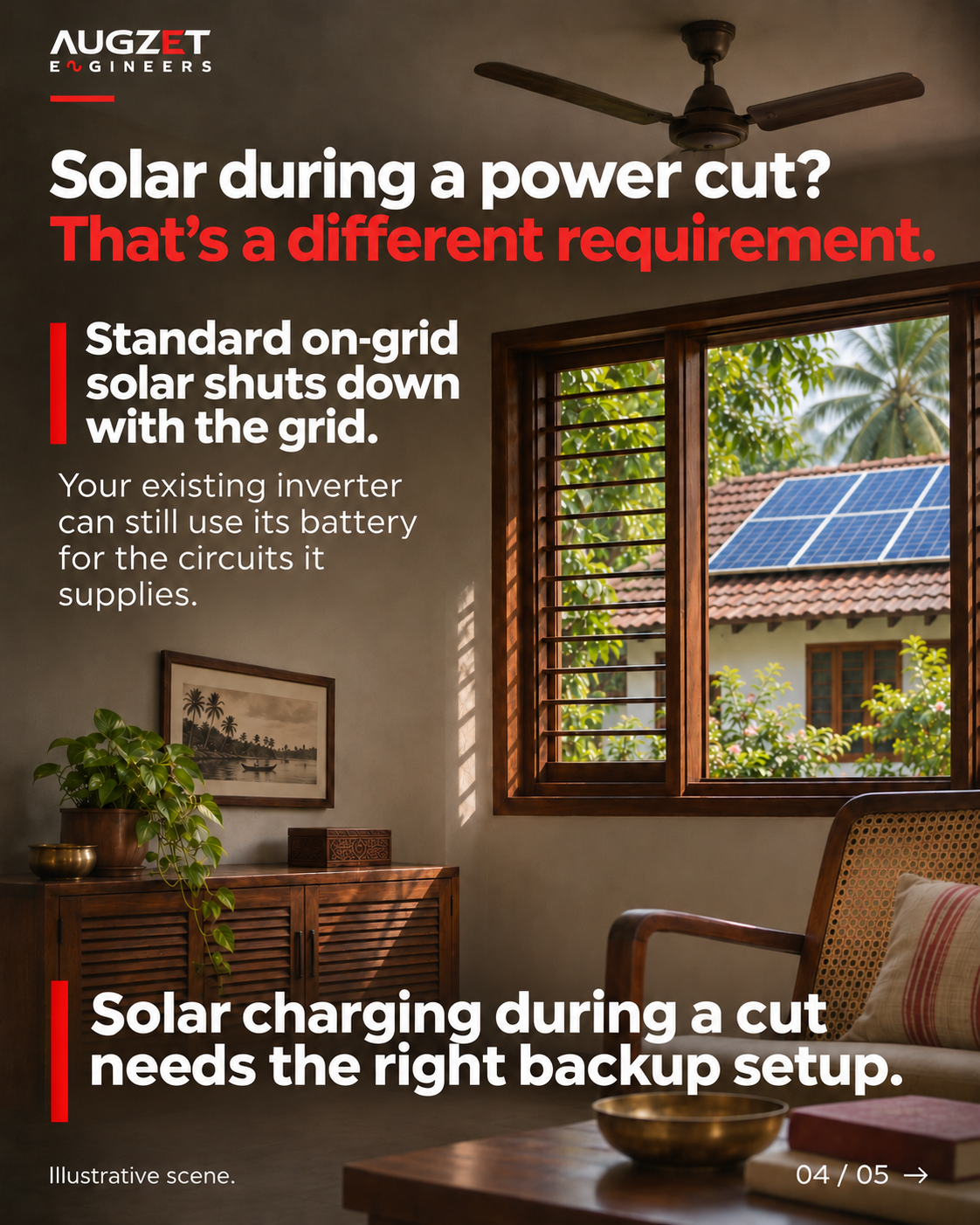
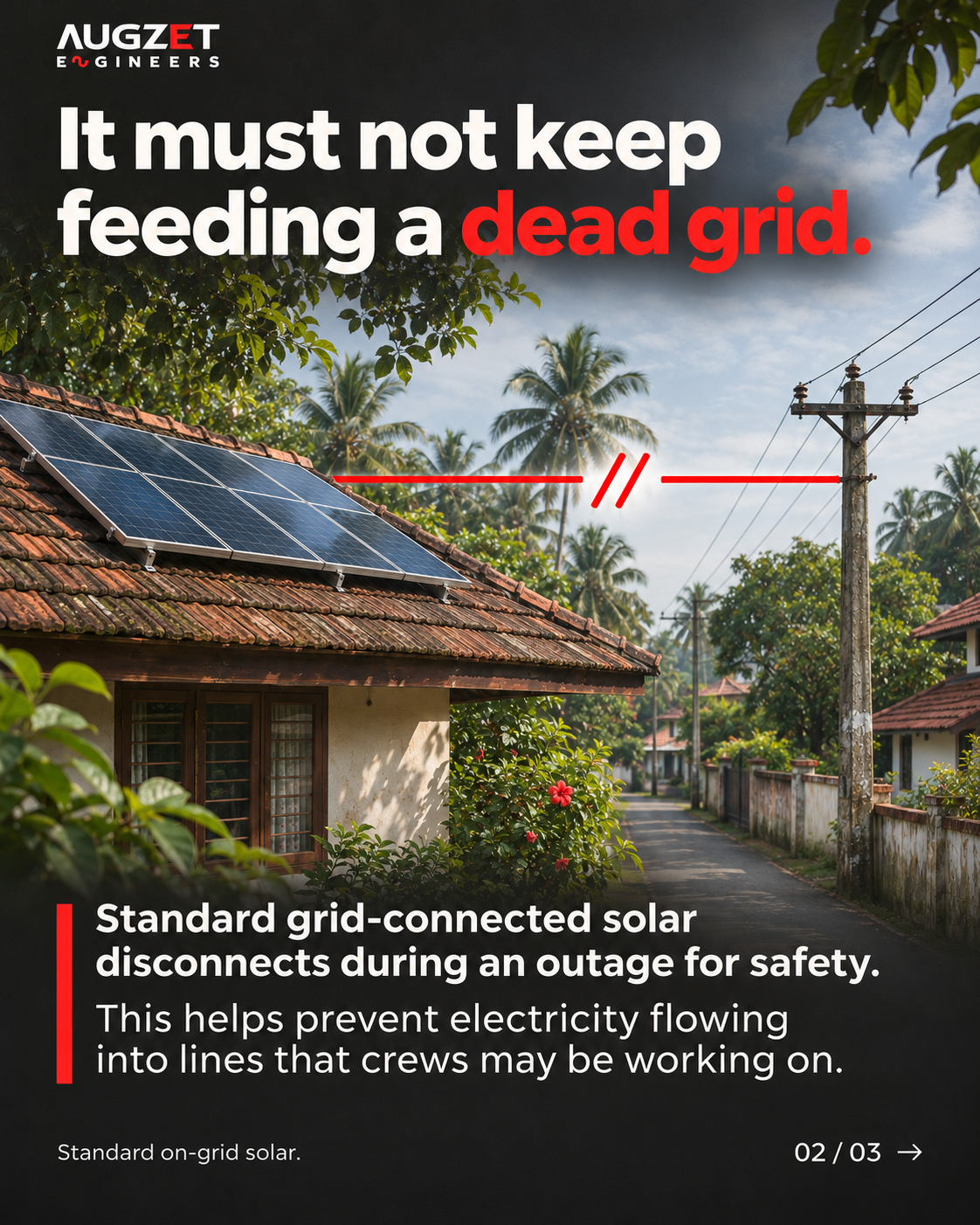
While the grid is available, solar can help meet household demand while your existing backup inverter charges normally. During a cut, standard on-grid solar disconnects.
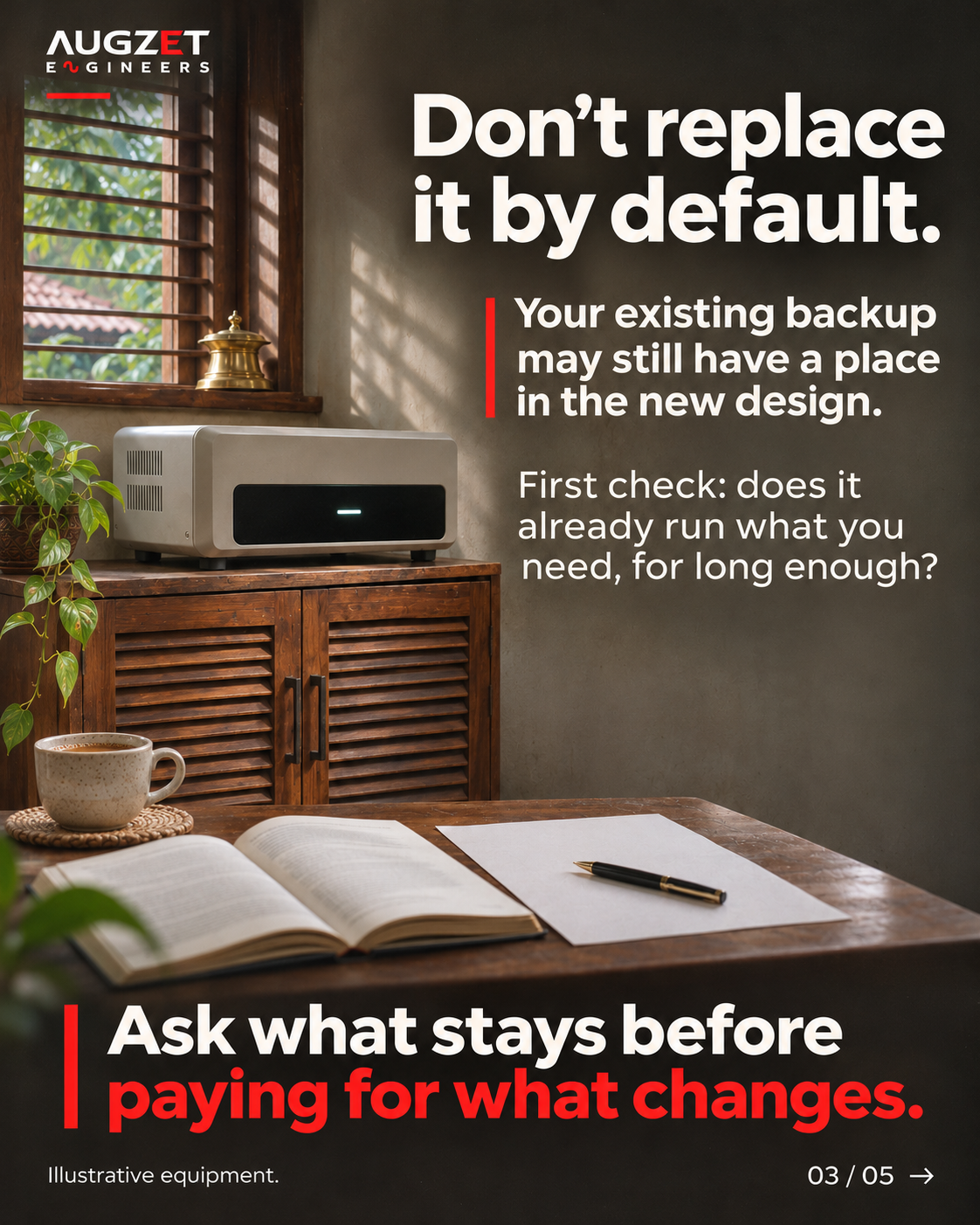
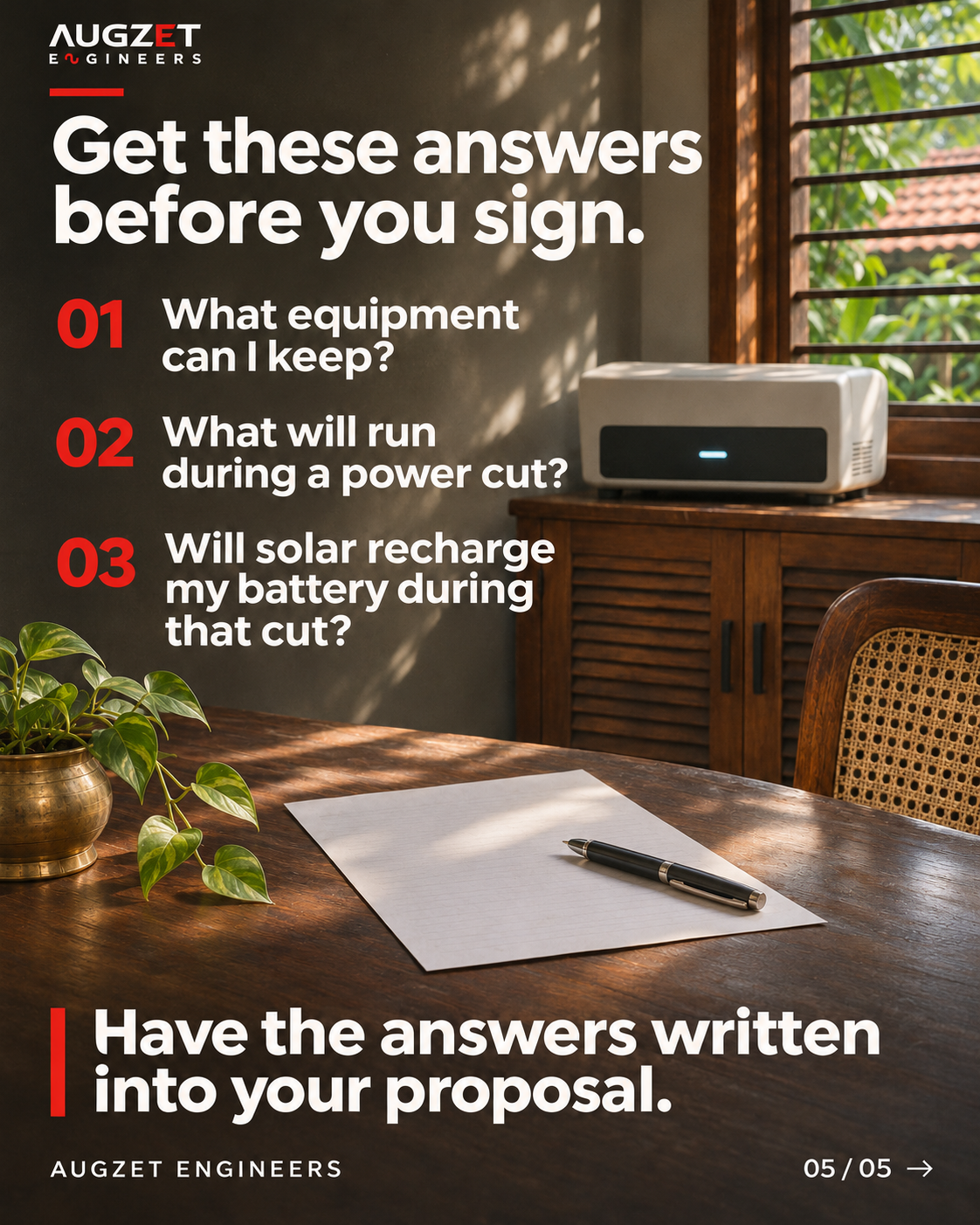
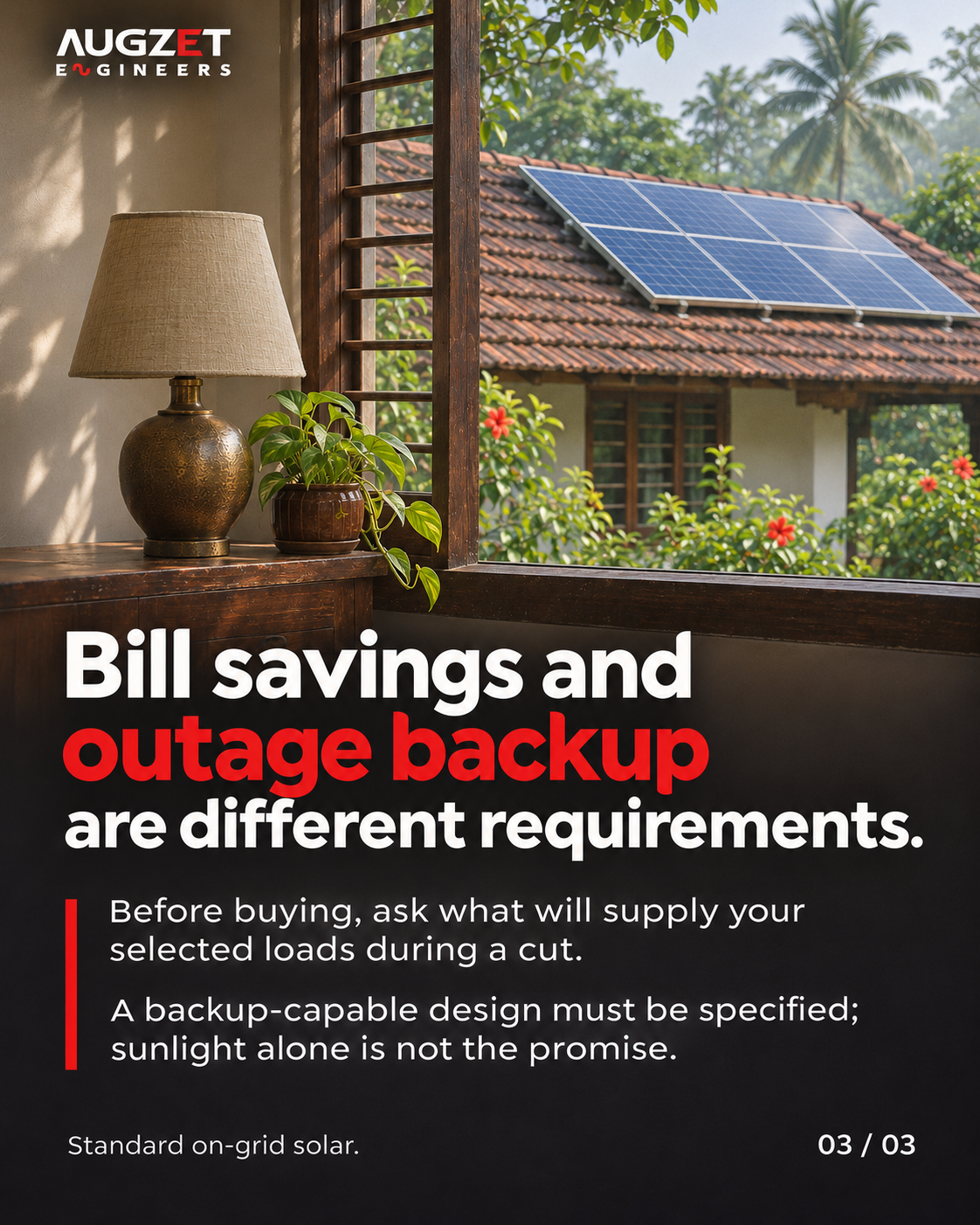
Before accepting a proposal, ask which equipment stays, which loads will work during a power cut, and whether solar can recharge the backup battery during that cut. Get the answers for your proposed configuration in writing. Compatibility and the backup arrangement matter.
Planning solar or electrical work? Message Augzet Engineers to discuss your requirements.
Automatic shutdown during a grid outage can be normal behaviour for standard on-grid solar. It is a safety function, not by itself evidence of failed panels. Systems designed for isolated backup are a different configuration. If power-cut supply matters to you, have the proposed loads and operating limits explained before agreeing to the system.
Planning solar or electrical work? Message Augzet Engineers to discuss your requirements.
A proposal may start with photographs or remote roof information. What matters is whether the final design accounts for your property and electricity use, and whether unresolved site work is made clear. Ask how shade, roof condition, equipment placement and any electrical changes were assessed.
Share your electricity bills and mention planned additions, such as another AC or an EV charger, so the proposal accounts for more than today's consumption. Avoid comparing savings estimates without comparing their assumptions.
Planning solar or electrical work? Message Augzet Engineers to discuss your requirements.
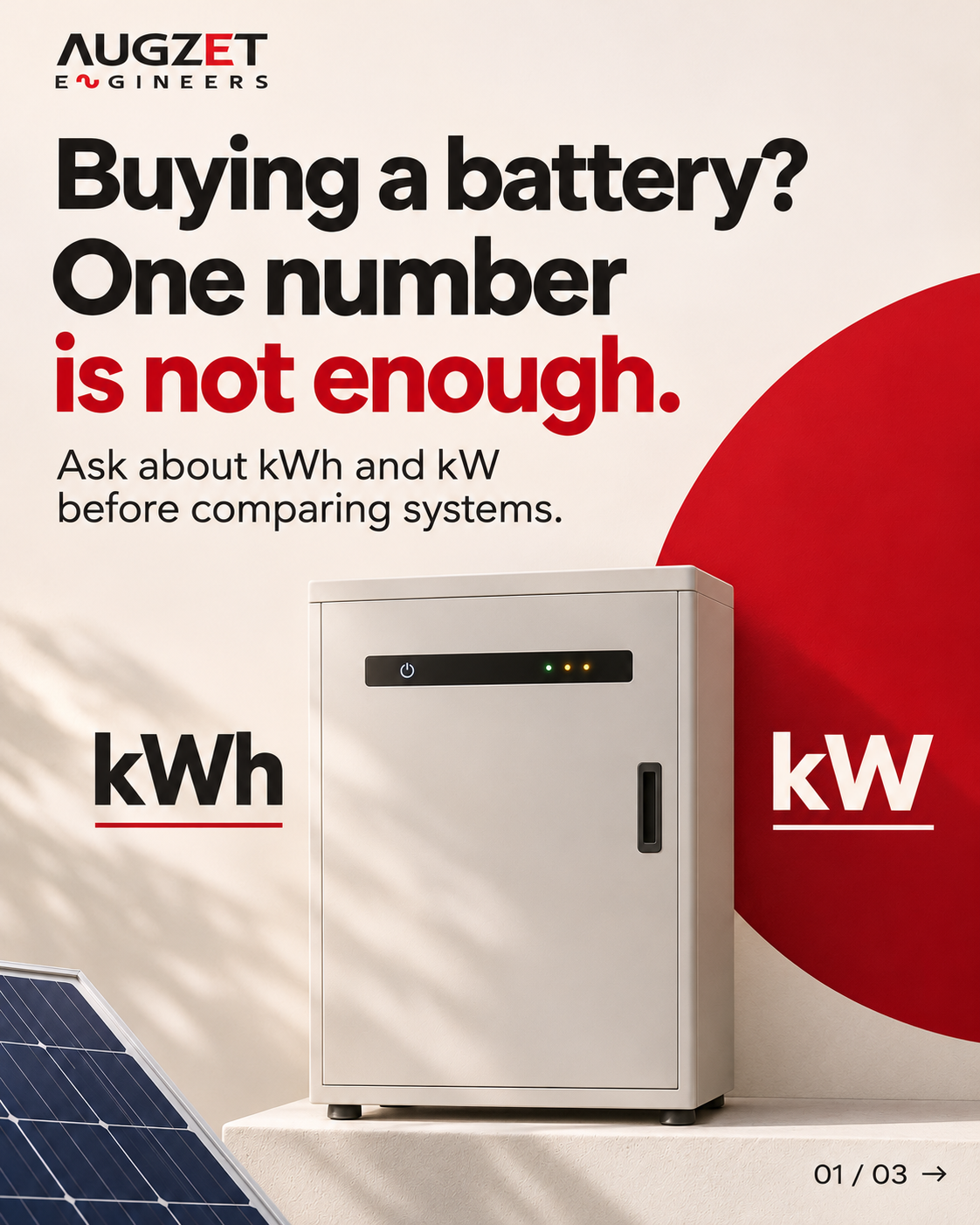
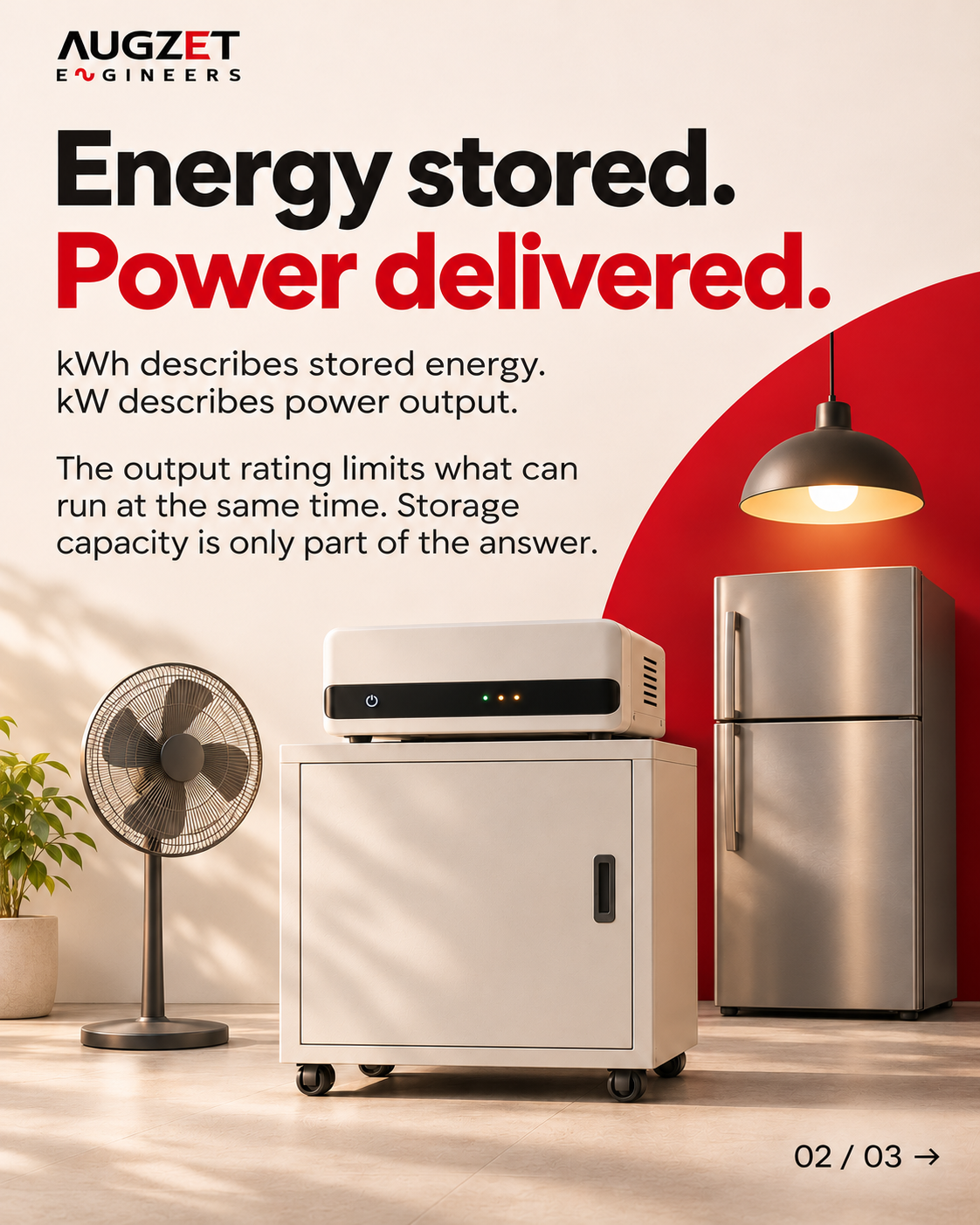
Battery capacity and power output answer different questions. Energy capacity is measured in kWh—the same unit used on your electricity bill. Power output, measured in kW, limits what the system can supply at once.
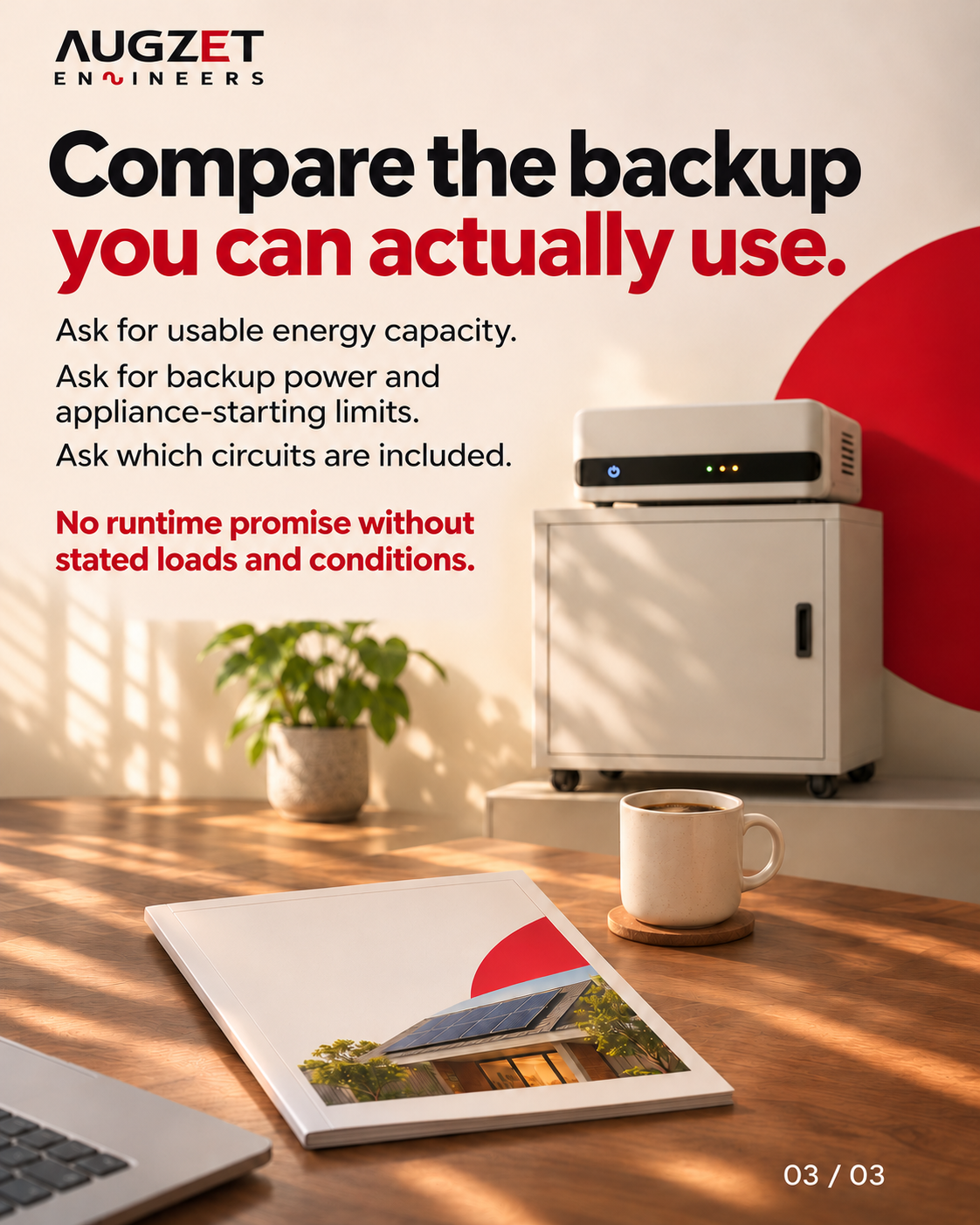
For outage backup, also check that the proposed system is configured for it and that the named circuits and appliance starting demands are covered. Ask for an estimate tied to stated loads and conditions, rather than a headline promise of a whole night.
Planning solar or electrical work? Message Augzet Engineers to discuss your requirements.
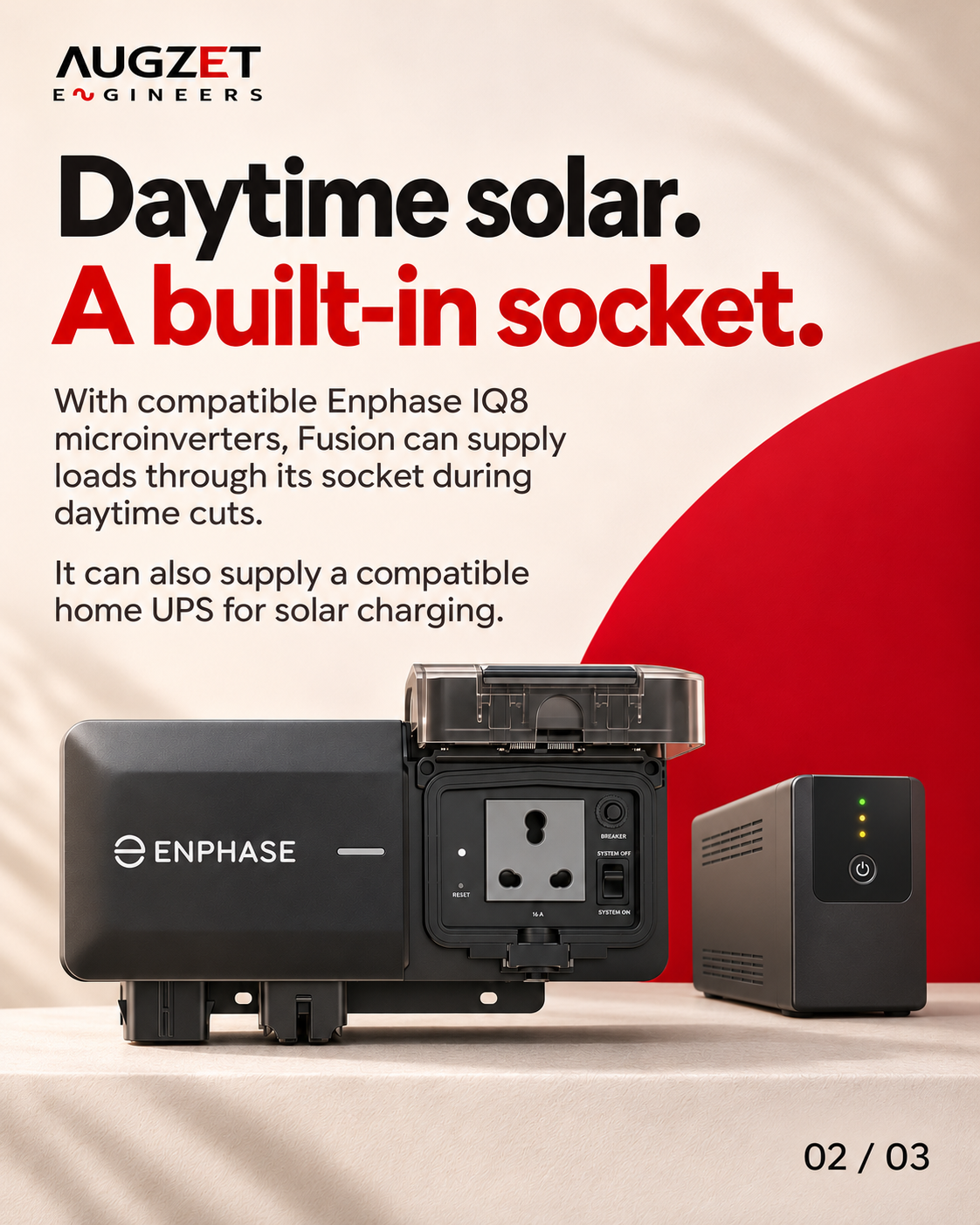
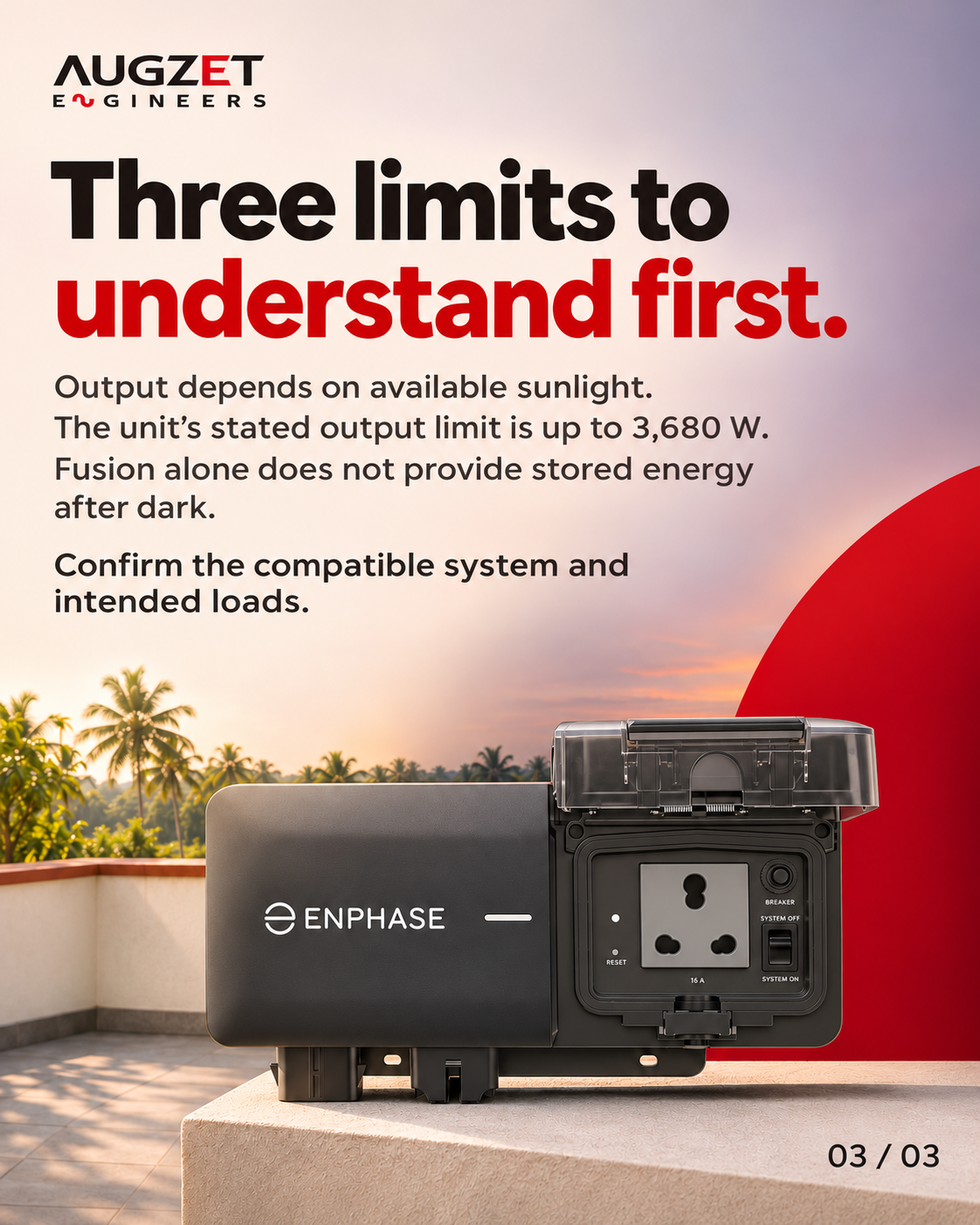
Enphase describes IQ Gateway Fusion as an India-market system for IQ8 microinverters, combining a gateway, relay and power socket. Its published limit is up to 3,680 W per unit; this is not a guarantee of that output in every sunlight condition. UPS pairing can extend backup through solar charging, but compatibility and loads need checking. Any after-dark backup comes from stored energy in a separate supported arrangement, not sunlight from Fusion alone.
Planning solar or electrical work? Message Augzet Engineers to discuss your requirements.
These are the optional briefs for the filming plan. There is no need to record everything before we can post.
Keep it simple. Phone vertical, daylight, a quiet spot. Aim for 30–60 seconds on one question. Pause and repeat a sentence if you slip. Send the original file as a WhatsApp document; we handle editing and captions.
Existing inverter + solar
“Already have an inverter at home? Here is what to check before going solar.”
Explain the different jobs of a home backup inverter and standard on-grid solar.
Explain that retaining equipment depends on its condition, compatibility and proposed wiring.
Separate normal grid operation from power-cut operation. Avoid promising battery charging in a cut without the right configuration.
What to show: Your existing inverter/UPS example or a clear equipment view. Keep covers closed.
What a 3 kW solar quote really includes
“Two quotes can both say 3 kW and still cover different things.”
Use a current, genuine quotation to explain equipment and installation scope.
Separate the full price, any expected subsidy, and the payment stages. Only use amounts and eligibility you can confirm.
Explain possible approval-related charges, exclusions and who handles warranty claims.
What to show: A quotation with all customer names, addresses and phone numbers covered.
Electrical checks before handover
“Before we hand over wiring, these are the things we check.”
Choose two or three checks you actually perform on this job. Explain why each matters to the owner.
Show the circuit identification and the drawings the customer receives.
Keep testing and live electrical work off-camera unless the qualified team can film it safely. No instructions for homeowners to open or touch a board.
What to show: Closed panel, circuit schedule and drawings. Blur customer details.
Why normal solar stops in a power cut
“The sun is out. Why has your solar stopped during a power cut?”
Specify that you mean standard grid-connected solar.
Explain that it disconnects to avoid feeding electricity into an isolated grid.
Explain that backup needs a deliberately configured system. Do not imply every solar system behaves identically.
What to show: Closed inverter or completed installation; explain in your own words.
Walk through a real site visit
“Before recommending panels, here is what we look at.”
Show how the bill and future household loads inform the proposal.
Explain the actual roof, shade and equipment-location checks on this property.
Explain any connection or electrical work still to be assessed. Do not promise the same outcome for every roof.
What to show: A few short views of the bill with details covered, roof and relevant equipment.
A real customer decision
“This customer chose this system because…”
Use a customer and project that you have permission to feature.
Explain their actual problem and why the selected configuration suited it.
Use customer-approved facts. Show bill or generation figures only with the correct period and context.
What to show: The customer and you by the completed installation, or the equipment while you explain.
Fusion: what works in a daytime cut
“Backup without a new battery? The daytime part matters.”
Explain compatible Enphase IQ8 microinverters and the dedicated socket supply.
Explain sunlight and load limits. The published output ceiling is up to 3,680 W, not a guaranteed constant supply.
Explain that after-dark backup requires stored energy in a separate supported arrangement. Check UPS compatibility before making an example claim.
What to show: The actual Fusion equipment if available. Otherwise explain without pretending to demonstrate an installation.
Short posts for the remaining Mondays in November, with suggested visuals and copy ready to use. Dates are proposed; nothing is scheduled yet.
MONDAY / 9 NOVEMBER
Your old inverter still has a job.
Already have a home inverter and battery? Going solar does not automatically mean replacing them. A home backup inverter and a standard on-grid solar inverter do different jobs.
Before choosing a system, ask what equipment stays, what will work during a power cut, and whether battery charging during an outage is supported by the proposed setup.
Planning solar for your home in Aluva or nearby? Talk to Augzet Engineers about your existing equipment and requirements.
Suggested button: Call now · use the number already on the profile.
MONDAY / 16 NOVEMBER
Good wiring deserves a clear handover.
Building a home or planning rewiring? The handover matters as much as the finished switches and lights.
At Augzet Engineers, we design circuits before wiring and provide drawings at handover. Keep those drawings with your circuit list and test records. If the installation changes later, have the records updated too.
Speak to our team in Muttom, Aluva about electrical design and wiring for your project.
Suggested button: Call now · use the number already on the profile.
MONDAY / 23 NOVEMBER
A solar proposal should account for your home.
A useful solar proposal starts with your property and electricity use. Shade, roof condition, equipment placement and electrical changes can all affect the final design.
Share your electricity bills and mention planned additions, such as another AC or an EV charger. A proposal may begin with photographs or remote roof information; ask what still needs to be checked before installation.
Discuss your rooftop solar requirements with Augzet Engineers, Aluva.
Suggested button: Call now · use the number already on the profile.
MONDAY / 30 NOVEMBER
Battery capacity is only half the question.
Comparing battery backup systems? Check energy capacity and power output. Energy capacity is measured in kWh, the same unit used on your electricity bill. Power output, measured in kW, limits what the system can supply at once.
Ask which circuits are included and whether appliance starting demands are covered. A useful backup estimate names the loads and conditions behind it.
Talk to Augzet Engineers about the backup your home actually needs.
Suggested button: Call now · use the number already on the profile.